Why is this difficult?
Finding the right key for your songs can be challenging, especially if they don’t suit your vocal range. Complex chords can also hinder your ability to play your favorite songs effortlessly.
The Smart Solution
With our tool, you can easily transpose chords for guitar online, adjusting the key to match your voice or simplify challenging chord structures. Just enter your chords, select your desired key, and get instant results!
- User-friendly interface for quick transposition
- Supports various instruments beyond guitar
- Simplifies complex chords into easier shapes
- Instant results tailored to your specifications
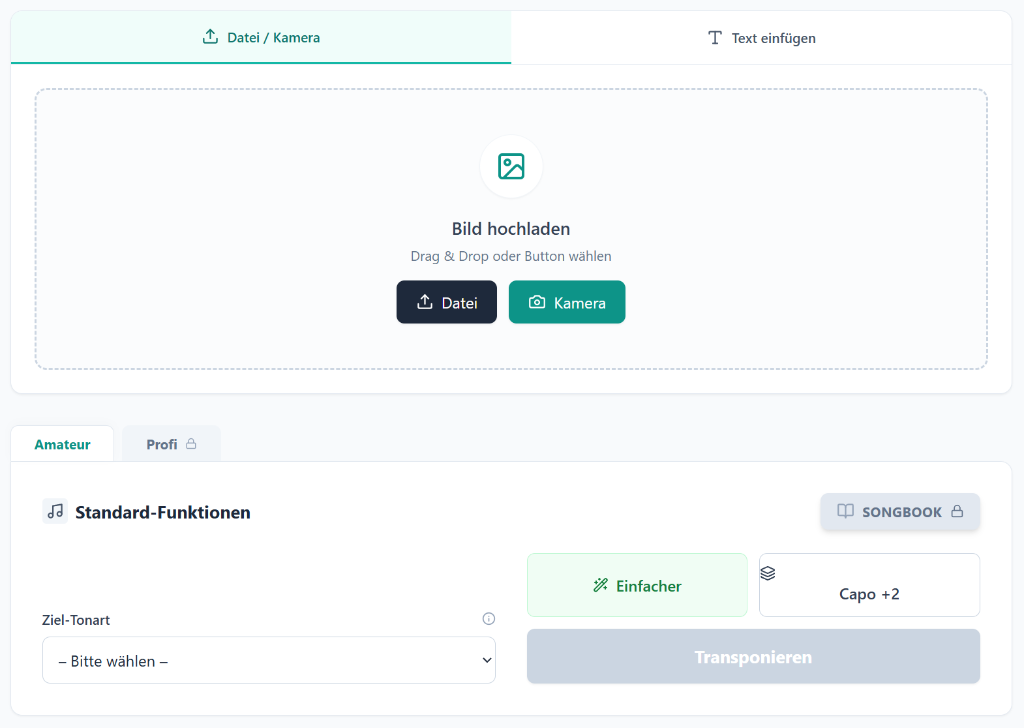
Transpose Your Guitar Chords in Seconds!
Transform your music with our online tool designed to transpose chords for guitar effortlessly. Whether you're a beginner or a seasoned musician, find the perfect key for your songs in just a few clicks.
Advanced Theory & Insights
Deepened knowledge for professionals. Analyzing nuances that beginners often miss.
Theoretical Foundations of Transposition
Digital Tools for Transposing Chords
Cultural Implications of Chord Transposition
FAQ
?
How does transposing chords for guitar online differ from traditional methods, and what tools or platforms provide the best user experience for this process?
Transposing chords for guitar online differs significantly from traditional methods primarily due to accessibility and convenience. Unlike traditional methods, where musicians often rely on manual calculations or physical charts, online tools and applications offer real-time transposition capabilities. This means that guitarists can quickly adjust the key of a song to match their vocal range or the instrumentation of their ensemble without significant effort.
Several platforms provide an excellent user experience for transposing chords. Websites like Ultimate Guitar and Chordify allow users to quickly input chords and transpose them with just a few clicks. Additionally, features like automated chord recognition from audio files on SoundSlice can enhance this process by integrating music theory seamlessly with real-world applications.
For the best experience, look for platforms that offer user-friendly interfaces, real-time transposition, and the ability to save and share customized chord charts. Consider experimenting with different tools to find the one that best fits your needs, as some may offer additional features like interactive play-along options or printable chord sheets.
?
Why is it essential for guitarists to understand the theory behind chord transposition, and how does this understanding enhance their overall musical creativity and improvisation skills?
Understanding the theory behind chord transposition is essential for guitarists for several reasons. Firstly, it enables musicians to adapt songs to different vocal ranges or instrumental settings, ensuring that they can perform comfortably and effectively with various artists. By mastering transposition, guitarists can take a piece originally in the key of C and shift it to G or A, making it easier for singers or to match the mood of an ensemble.
Moreover, this understanding fosters musical versatility. When guitarists learn how to transpose chords, they gain insight into the relationships between different keys and their specific chord structures. This knowledge allows them to improvise more freely, as they can create new progressions and variations based on a solid foundation of scales and harmony. For example, knowing that a chord progression in C major can also translate into A minor with the same relative chords opens a world of creative possibilities.
To enhance your transposition skills, start by practicing moving common chord shapes into various keys. Use a capo to explore and hear the differences. Additionally, experiment with writing your own progressions and transposing them to see how they feel in different contexts. This will significantly boost your musical creativity and improvisation skills.
?
In what contexts would a musician prefer to use online chord transposition tools rather than manual transposition, and what specific features should these tools offer to accommodate different styles of music?
Musicians often find themselves in situations where **speed and accuracy** are crucial, making online chord transposition tools a preferred choice over manual transposition. These tools are particularly beneficial during live performances or jam sessions where there is limited time to transpose songs while maintaining the correct key.
Moreover, online tools can quickly handle complex chord progressions, which may be daunting manually, especially for beginners or musicians unfamiliar with music theory. They allow musicians to experiment with different keys effortlessly, catering to vocal ranges or instrumental requirements.
**Specific features** that should be included in these tools to accommodate various styles of music are essential. The tools should offer a **user-friendly interface** with an intuitive chord chart display. Additionally, features like **automatic chord detection** for uploaded tracks, a **wide array of chord voicings** (including alternative or extended chords), and the ability to save or share transpositions are invaluable. Integration with **different instruments**, such as guitar, piano, or ukulele, ensures versatility for diverse musical genres.
Ultimately, musicians seeking to streamline their workflow or tackle new pieces would greatly benefit from these advanced online transposition tools.
?
How can the use of online resources for transposing guitar chords improve accessibility for beginner musicians, and what challenges might arise when relying solely on these digital tools?
Using **online resources for transposing guitar chords** vastly enhances accessibility for beginner musicians. These tools allow users to effortlessly convert chords into different keys, accommodating various vocal ranges and instrumental preferences. This flexibility is particularly beneficial for novices who may struggle with music theory and require intuitive solutions. By omitting complex theoretical explanations, online transposing tools break down barriers, making music more approachable and enjoyable for early learners.
However, reliance solely on these digital tools can pose several challenges. One major concern is the potential for **over-dependence**. Beginners may find themselves leaning too heavily on online resources, stunting their development in understanding music theory and chord structures. Additionally, not all online resources are equally reliable; some may produce inaccuracies, leading to frustration and confusion when individuals attempt to play along with their favorite songs. To mitigate these issues, it’s recommended that beginner musicians complement their use of online tools with **traditional learning methods**, such as taking lessons or studying instructional materials. This multipronged approach fosters a well-rounded understanding of music, empowering musicians to navigate challenges independently while still enjoying the convenience of digital resources.
?
Why do some online chord transposition applications provide different results for the same chord when transposed, and how can musicians ensure accuracy and consistency in their transpositions?
Online chord transposition applications can produce varying results for the same chord due to several factors including the algorithm used, the musical context, and the intended instrument. Some applications may prioritize ease of playing—transposing to common positions on the guitar neck—while others might adhere strictly to theoretical accuracy. Additionally, chords can have multiple voicings and variations, which can lead to different interpretations when transposed.
To ensure accuracy and consistency in your transpositions, musicians should consider the following actionable advice:
- Understand the Theory: Familiarize yourself with basic music theory. Knowing how chords are built and how they relate to each other will help you manually check transpositions.
- Use Reputable Tools: Opt for established and reliable chord transposition tools. Read reviews or ask peers for recommendations to find applications that consistently yield accurate results.
- Cross-Verify: After using an application, cross-verify the results by checking with another tool or a trusted music source.
- Practice Manual Transposition: Enhance your skills by practicing transposition by hand. This not only sharpens your knowledge but also helps validate automated results.
Ultimately, being informed and proactive in your approach to chord transposition will lead to better musical outcomes.