Varför är det svårt?
Att spela ett instrument kan vara utmanande när ackorden inte passar din röst eller stil. Många musiker kämpar med att hitta den rätta tonarten för sina favoritlåtar.
Den smarta lösningen
Med vår tjänst kan du enkelt översätta ackordblad till en tonart som passar dig. Översätt ackordblad och få musiken att låta precis som du vill!
- Snabb och enkel översättning av ackord
- Anpassa musik till din röst
- Förenkla komplicerade ackord
- Stöd för flera instrument
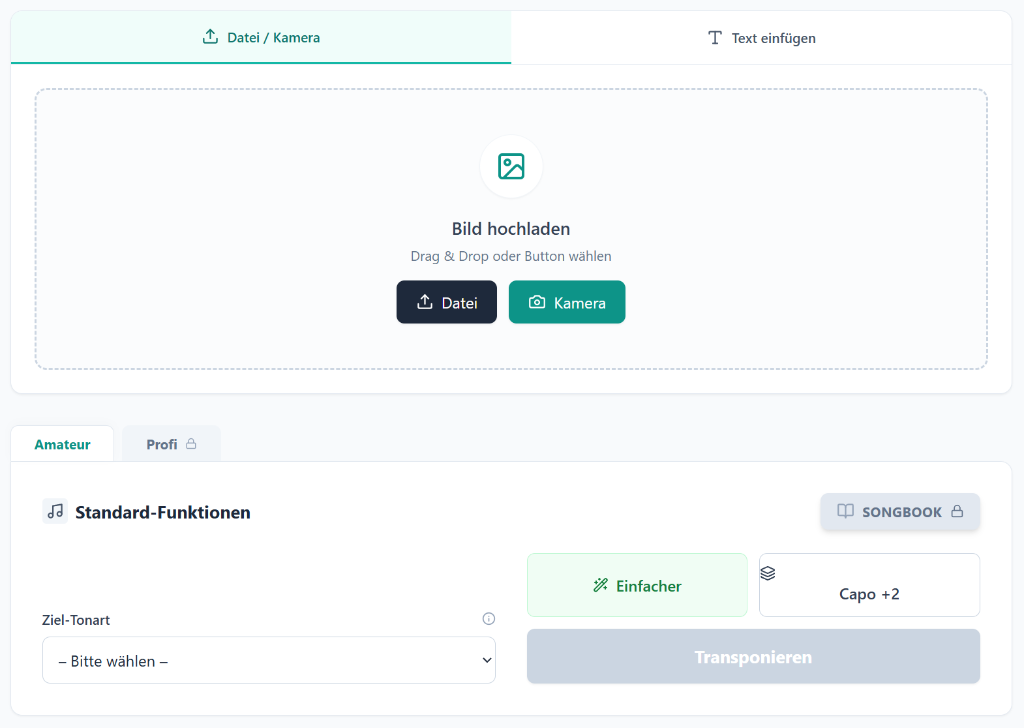
KORDA app-gränssnitt
Översätt dina ackordblad online!
Har du svårt att få låtar att låta rätt? Med vår tjänst för att översätta ackordblad kan du snabbt justera tonarten och spela dina favoritlåtar på ett sätt som passar dig.
Översätt ackordblad in Action
Fördjupning
Avancerad teori och insikter
Fördjupad kunskap för proffs. Nyanser som nybörjare ofta missar.
1
Översättningens Roll i Musikaliskt Uttryck
Översättning av ackordblad är en komplex process som går bortom att bara byta ut ord eller symboler. Inom musikvetenskapen är det avgörande att förstå hur musikalisk terminologi och kulturella kontexter påverkar tolkningen av ett stycke. Ackordblad fungerar inte bara som en visuell representation av musikaliska idéer; de är också bärare av musikaliska känslor och stilar. När ett ackordblad översätts från ett språk till ett annat, måste man ta hänsyn till både den musikalisk syntax och den kulturella bakgrunden hos den avsedda publiken. En ackordföljd kan ha olika känslomässiga konnotationer beroende på musiktraditionen i fråga. Till exempel, ett dominantackord i blues kan förmedla en känsla av konflikt och strävan, medan samma ackord i en klassisk kontext kan uppfattas som en uppbyggnad till resolution. Dessutom kan uttryckssätt som "piano" och "forte" ha nyanser som inte direkt översätts utan att förlora det emotionella budskapet. Därför är det avgörande att den som översätter ackordblad är medveten om dessa underliggande musikaliska och känslomässiga aspekter för att bevara den ursprungliga meningen och effekten.
2
Teoretiska Utmaningar vid Översättning av Musikaliska Termer
Att översätta ackordblad involverar mer än bara en direkt översättning; det kräver en djup förståelse för musikaliska teorier och terminologier. Många musikaliska termer har ingen direkt motsvarighet i andra språk, vilket kan leda till tolkningssvårigheter. Till exempel, termer som "modal interchange" eller "polyrythm" kan vara välkända för en musiker men kan vara svåra att förklara för en icke-musiker. För att övervinna dessa utmaningar kan det vara nödvändigt att inkludera fotnoter eller kommentarer som ger ytterligare kontext. Det är också viktigt att beakta den musikalisk stil som ackordbladet representerar, eftersom olika genrer har sina egna specifika terminologier och önskad uttryckssätt. En djupgående förståelse för harmoniska strukturer och hur de används inom olika musiktraditioner kan hjälpa översättaren att fatta välgrundade beslut om hur dessa termer bör översättas. Dessutom, i en globaliserad musikmiljö, är det också avgörande att utveckla en standardiserad terminologi som kan användas över språkgränser för att underlätta samarbete och förståelse mellan musiker från olika kulturer.
3
Kulturell Kontext och Ackordbladets Funktion
Kulturell kontext spelar en central roll i hur ackordblad är utformade och översatta. Musik är en spegel av de samhällen där den skapas, och ackordblad är en manifestation av detta kulturella uttryck. När ackordblad översätts, är det viktigt att beakta den musikalisk tradition som ligger till grund för stycket. Till exempel, i afroamerikansk musik är blues och jazz genrer som ofta innefattar improvisation och call and response, vilket kan ge en annan innebörd åt de ackord som används, jämfört med den mer strukturerade klassiska musiken. Översättningen av ackordblad i dessa fall måste gå bortom den tekniska aspekten och inkludera en förståelse för de kulturella berättelser och historiska sammanhang som ackorden representerar. Dessutom kan olika kulturer ha olika sätt att förstå och använda harmoniska progressioner, vilket gör det nödvändigt för översättaren att ha en känsla för det kulturella kapitalet och de traditioner som omger musiken. Genom att integrera dessa aspekter kan en översättning av ackordblad bli ett mer autentiskt och meningsfullt verktyg för musikaliskt lärande och utbyte.
Verifierade svar
Vanliga frågor
?
How does the process of translating sheet music lyrics and chords in 'Översätt ackordblad' impact the way musicians interpret and perform a song in different cultural contexts?
Översätt ackordblad implicates a detailed process of translating not only the lyrics and chords of a song but also its cultural elements. This translation can significantly alter how musicians interpret and perform a song in different cultural contexts. When lyrics are translated, the original meaning, emotional undertone, and cultural references may be lost or altered. As a result, the performance may not only sound different but also evoke varying emotions depending on the cultural backdrop of the audience and the musicians themselves.
In the context of translating sheet music, it is vital for musicians to ensure that the essence of the song remains intact. One actionable approach is to engage in collaborative translation, involving musicians from the target culture to help retain the intended sentiment and tone of the original piece. Additionally, consider adapting chords to fit traditional instruments of the target culture, enhancing the authenticity of the performance.
Ultimately, successful translation in 'Översätt ackordblad' requires an understanding of both the technical aspects of music and the sociocultural nuances inherent in lyrics, allowing musicians to create a more genuine and relatable experience for diverse audiences.
?
Why is it important to consider the linguistic nuances and idiomatic expressions when translating chord sheets in 'Översätt ackordblad', and how can these aspects influence the emotional delivery of the music?
Att översätta ackordblad är mer än en enkel uppgift; det handlar om att fånga den känslomässiga kärnan i musiken. När man arbetar med sådana översättningar är det avgörande att beakta de linguistic nuanser som finns i både käll- och målspråket. Idiomatiska uttryck, som är specifika för en kultur och ett språk, kan ha ytterst skilda betydelser och känslomässiga konnotationer. Därför är det viktigt att man inte bara översätter ord för ord, utan istället strävar efter att återspegla den avsedda känslan och atmosfären i låten.
Genom att använda rätt idiomatiska uttryck kan man förstärka låtens budskap och göra det mer relaterbart för den svenska publiken. Till exempel kan en direkt översättning av en fras leda till missförstånd eller förlora sin poetiska styrka. Därför bör översättaren vara medveten om både språkets och kulturspecifika kontexter.
Tips för en effektiv översättning inkluderar att lyssna på låten flera gånger för att förstå dess känsla och syfte samt att konsultera med medmusiker eller andra översättare för att få feedback på val av ord och uttryck. Genom att ta hänsyn till dessa aspekter kan det emotionella budskapet i musiken levereras på bästa möjliga sätt.
?
In what ways does the method of 'Översätt ackordblad' reflect the evolving relationship between language and music, particularly in the context of globalization and cross-cultural music influences?
Översätt ackordblad, or translating chord sheets, reflects the evolving relationship between language and music in several significant ways. In today’s globalized world, music serves as a universal language that transcends borders, merging different cultural elements. The method of translating chord sheets allows musicians from diverse backgrounds to share and interpret songs, fostering collaboration and creativity across cultures.
Firstly, this method enhances accessibility. Musicians who may not have the same linguistic background can participate in the creation and performance of music, inviting a broader audience into the musical experience. For instance, a Swedish song can be translated into English or Spanish, enabling artists from those cultures to incorporate it into their repertoires. This not only preserves the original song's essence but also nurtures a shared cultural legacy.
Furthermore, the act of translating necessitates an understanding of both linguistic nuances and musical structure. Musicians must carefully consider how to convey not just lyrics but also the emotion and intent behind them. This encourages a deeper connection between artists and audiences, ultimately enriching the musical landscape.
In practice, musicians should actively seek out translated chord sheets, engage in collaborative performances, and be open to exploring music from different cultures. This approach will not only broaden their own musical horizons but also contribute to the melding of diverse musical traditions.
?
How do the challenges faced in maintaining the rhythm and structure of original lyrics while ensuring accurate translation in 'Översätt ackordblad' affect the creativity of contemporary songwriters?
Översätt ackordblad innebär att översätta låttext och ackord på ett sätt som bevarar den ursprungliga rytmen och strukturen. En av de största utmaningarna är att hitta ord och fraser som inte bara passar melodin utan också behåller samma känsla och betydelse som originalet. Denna process kan ibland hämma den kreativa friheten för samtida låtskrivare, som känner sig begränsade av behovet av att hålla sig nära den ursprungliga texten.
Vid översättning står man inför dilemman där den grammatiska strukturen och kulturella referenser kan variera kraftigt mellan språk. Det krävs ofta kreativ improvisation för att lösa dessa problem utan att förlora låtens essens. För att navigera dessa utmaningar kan låtskrivare överväga att samarbeta med översättare som har djup förståelse för både språket och musiken, samt involvera sig i experimentell poetik där man medvetet leker med språkets ramar.
Ett handfast råd är att utveckla en flexibel själsliga som möjliggör att man kan anpassa text utan att tappa den känslomässiga kärnan. Genom att öva på olika översättningsmetoder och vara öppna för nya uttrycksformer kan samtida låtskrivare faktiskt berika sin musikaliska kreativitet.
?
Why might musicians prefer certain translation approaches in 'Översätt ackordblad', and how does this preference affect the accessibility of songs for audiences who speak different languages?
Musicians often prefer specific translation approaches in 'Översätt ackordblad' based on their goals for fidelity to the original song, emotional resonance, and audience engagement. Two common translation strategies are literal translations and adaptations. A **literal translation** maintains the original phrasing and meaning, ensuring that the song's structure remains intact. This approach can be beneficial for audiences familiar with the original language, as it provides a direct connection to the lyrics' intent. However, literal translations may sometimes fail to capture idiomatic expressions and cultural nuances, which can detract from the song's emotional impact.
On the other hand, **adaptations** involve rephrasing or altering lyrics to better suit the target language's cultural context and musicality. This method often leads to greater accessibility for audiences who speak different languages, as it prioritizes relatability and emotional connection over direct translation. However, the downside may include a loss of some original meaning or artistic intent.
To enhance the **accessibility of songs** for multilingual audiences, musicians can consider providing both versions—original and translated—or include annotations that explain cultural references. Additionally, utilizing universal themes in their compositions can make songs more relatable across diverse languages and cultures. Thus, careful consideration of translation choices can significantly impact how effectively songs reach and resonate with different audiences.