Muuda laulu akorde teise võtmesse

Kas laulu akordid ei sobi sinu hääleulatusega? Meie tööriist aitab sul leida ideaalse võtme!

The Challenge

Why is this difficult?

Paljud muusikud seisavad silmitsi probleemiga, et laulud ei sobi nende hääleulatusele või instrumentide mängimise mugavusele. Akordide keerukus võib muuta lemmiklaulude esitamise keeruliseks ja vähem nauditavaks.

The Smart Solution

Muuda laulu akorde teise võtmesse, et leida sobiv toon, mis sobib sinu hääle ja instrumentidega. Meie tööriist muudab akordide transpositsiooni kiireks ja lihtsaks, võimaldades sul keskenduda muusika nautimisele.

  • Kiire ja lihtne akordide transpositsioon
  • Sobib igasugustele instrumentidele
  • Aitab kohandada laule vastavalt sinu hääleulatusele
  • Kasuta meie tööriista igasuguste muusikastiilide jaoks
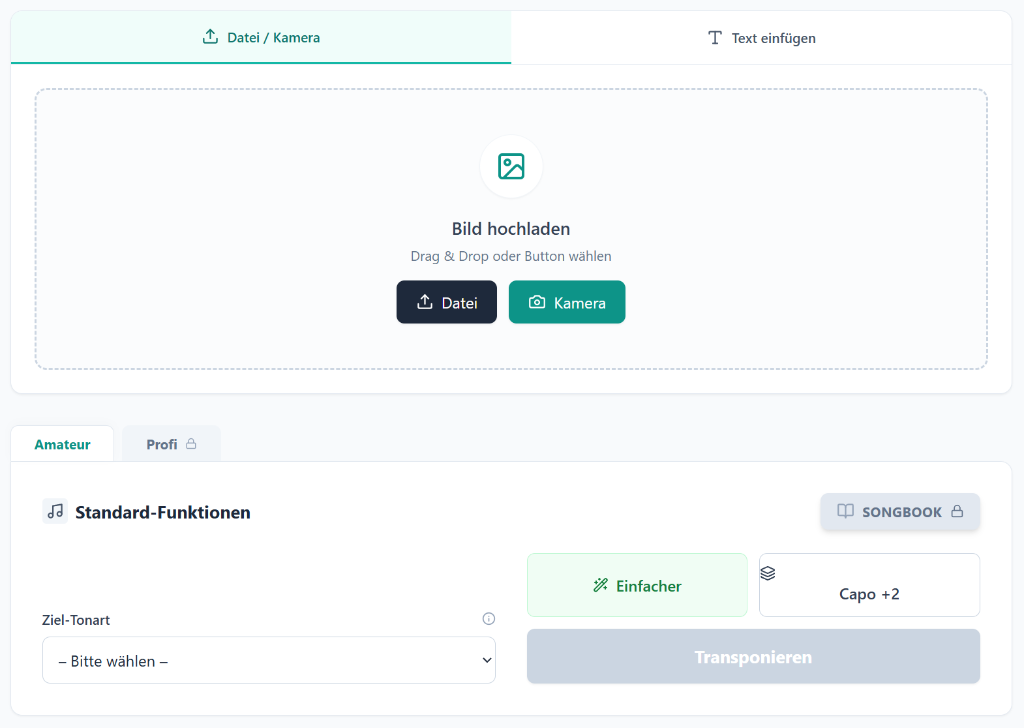
Muuda laulu akorde teise võtmesse App Interface
KORDA App Interface

Mugava ja kiire akordide muutmine

Meie veebitööriist võimaldab sul kiiresti ja lihtsalt muuta laulu akorde teise võtmesse. Olgu sul vajadus muuta laulu hääleulatust või muuta keerulisi akorde lihtsamaks – meie tööriist teeb selle ühe lihtsa sammuga.

Muuda laulu akorde teise võtmesse in Action
Expert Deep Dive

Advanced Theory & Insights

Deepened knowledge for professionals. Analyzing nuances that beginners often miss.

1

Harmoonilise Struktuuri Sügavam Mõistmine

Laulu akorde teisendamine teise võtmesse ei tähenda pelgalt akordide lihtsat üleviimist. See protsess hõlmab sügavat arusaamist harmoonilisest struktuurist ja tonaalsetest suhetest. Iga võti omab oma unikaalset toonilist identiteeti, mis mõjutab laulu emotsionaalset laadi ja väljendust. Näiteks, kui laulu originaalvõti on C-duur, siis C-duuri akorde (C, F, G) võib teisendada G-duuri (G, C, D) kaudu. Siiski tuleb arvesse võtta, et akordide funktsioon ja roll võivad muutuda, sõltumata nende absoluutsetest nimedest. Seetõttu on oluline analüüsida, millised akordigruppide funktsioonid on originaalis ja kuidas need muutuvad uues võtmes. Akordide teisendamisel tuleb arvestada ka harmoonilisi progressioone ja nende tekitatavat pinget ning lahendust, et säilitada laulu loo loomulik vool. Samuti mõjutab laulu meloodia ja sõnum akordide valiku ning järjestuse sobivust. Seetõttu on kasulik mõista, kuidas meloodiline joon seondub akordilise alusega ja kuidas see muutub, kui akorde teisendatakse teise võtmesse.
2

Transpositsiooni Tehnilised Aspektid

Laulu transpositsioon teise võtmesse on mitte ainult akordide üleviimise küsimus, vaid ka tehniline kunst, mis hõlmab instrumentatsiooni, vokaalset vahemikku ja mängutehnika kohandamist. Iga instrument, olgu see siis klaver, kitarr või orkester, omab kindlaid häälestusomadusi ja mängimistaktikaid, mis võivad varieeruda sõltuvalt võtmega. Näiteks, kui teeme C-duurist D-duuri, peab kitarrist olema ettevaatlik, et mitte ainult akorde üleviida, vaid ka arvestada, kuidas see mõjutab mängimise mugavust ja heli kvaliteeti. Erinevate instrumentide puhul võivad teatud akordid olla mängitavad mugavamalt teatud kõrgustes või sagedustes. Samuti peab laulu esitajal olema teadlik, kas tema vokaalne vahemik suudab uues võtmes laulu tõhusalt esitada. Väikesed muudatused, nagu akordide dünaamika või arpeggio kasutamine, võivad oluliselt muuta laulu helilist iseloomu ja arusaamist. Samuti on oluline teada, et mõned laulud võivad kaotada oma emotsionaalse mõju, kui neid transponeeritakse liiga kaugele originaalist, mistõttu on soovitatav teha katsetusi, et leida ideaalne võti ja akordide kombinatsioon.
3

Soolo- ja Harmooniapartii Ühisosa

Akordide teisendamine teise võtmesse ei puuduta ainult harmoonilisi kihte, vaid ka meloodilisi jooni, mis sageli koosnevad vokaalsetest soolosoolodest või instrumentaalsetest partiiidest. Meloodia ja akordiline struktuur peavad olema harmooniliselt kooskõlas, et luua ühtne helipilt. Kui laulu transponitakse, võib juhtuda, et meloodia peaks läbima kohandusi, et see sobituks uue akordiliste arendustega. Näiteks võib originaalmeloodia teatud intervallide ja dünaamika tõttu uues võtmes kõlada liiga madalalt või liiga kõrgel. Seetõttu on kasulik tegeleda meloodilise analüüsiga ja kindlaks teha, millised intervallid ja meloodilised jooned jäävad kehtima, et hoida laulu loomulikku voolu. Samuti on oluline mõista, kuidas harmoonilised funktsioonid toetavad ja enrich (rikastavad) meloodiat, et säilitada laulu ehedus ja emotsionaalne sügavus. Soolo- ja harmooniapartii ühisosa analüüs nõuab laiemat arusaama muusikateooriast, et tagada, et kõik elemendid töötavad koos, luues meeldiva ja mõjuva muusikaelamuse.
Verified Answers

FAQ

? How does the process of transposing a song to a different key affect its emotional impact and overall sound, particularly in the context of Estonian music traditions?

Transposing a song to a different key can significantly affect its emotional impact and overall sound. In the context of Estonian music traditions, which often emphasize the subtlety of melody and harmony, changing the key may shift the song's tonal qualities and emotional resonance. For instance, a piece in a lower key might evoke a sense of melancholy, while the same piece in a higher key can feel more uplifting and bright. This is particularly relevant in the Estonian choral and folk music, where the mood conveyed by a song is crucial to its interpretation and performance. Additionally, the choice of key can influence the accessibility of the music for performers and singers. A more comfortable key may encourage better vocal performance and emotional delivery, enhancing the audience's overall experience. Therefore, when transposing, consider the vocal range and emotional qualities you wish to emphasize. To effectively transpose a song, identify the original key's emotional tone and determine how different keys might change that effect. Try performing the piece in various keys to gauge which version resonates best with the intended feeling, and leverage this to deepen the audience's connection to the music.

? Why might a musician choose to transpose 'Muuda laulu akorde teise võtmesse' specifically, and what implications does this have for the interpretation of the song's themes?

Transposing *Muuda laulu akorde teise võtmesse* can significantly influence both the **musicality** and the **interpretation** of the song. Musicians often transpose a piece to match their **vocal range** or that of their ensemble, ensuring that every performer can contribute effectively. By choosing a different key, the **emotional tone** can also shift, as variations in pitch affect the song’s resonance and impact. For example, moving to a higher key can elicit a sense of **upliftment and enthusiasm**, while a lower key may convey introspection or melancholy.

Moreover, transposing can highlight different **thematic elements** within the lyrics. If the song discusses themes of **change and transformation**, shifting to a key that embodies these feelings can enhance the overall message. It may encourage performers to explore the song from new **emotional angles**, potentially leading to fresh interpretations that connect more deeply with contemporary audiences.

As an actionable step, musicians should consider experimenting with various keys during rehearsals. This allows for the discovery of which key most effectively communicates the song's core **themes and emotions**. Engaging with different arrangements can lead to a richer performance and deeper audience connection.

? In what ways does the choice of key in 'Muuda laulu akorde teise võtmesse' reflect cultural and historical influences within the Estonian music scene?

'Muuda laulu akorde teise võtmesse' exemplifies how the choice of key within Estonian music is deeply interwoven with cultural and historical influences. The selection of a key can evoke specific emotional responses and holds significance not only in composition but also in the broader context of Estonian musical identity. For instance, traditional songs and folk music often utilize particular modes and scales that are reflective of **Estonian folklore**, thereby creating a strong sense of national identity and heritage. Moreover, the historical context, particularly during periods of foreign dominance and cultural suppression, has shaped musical styles and preferences. The choice of key may symbolize resistance or resilience, as composers often adapted existing folk themes into more complex structures that align with contemporary styles while remaining anchored in traditional values. For those interested in exploring this theme further, consider composing or arranging pieces in keys that resonate emotionally or historically with Estonian heritage. Engaging with local musicians and participating in folk music festivals can provide valuable insights and deepen your understanding of how the choice of key not only reflects but also influences the ongoing evolution of the Estonian music scene.

? How can the techniques used in transposing 'Muuda laulu akorde teise võtmesse' be applied to other songs within the Estonian folk repertoire, and what does this reveal about the flexibility of musical expression?

Transposing 'Muuda laulu akorde teise võtmesse' is a valuable exercise that illustrates the adaptability of musical pieces within the Estonian folk repertoire. This technique not only alters the key but also opens doors to new interpretations and emotional nuances, making the song more accessible to different vocal ranges and instrumental arrangements. The process of transposition can be applied to other traditional Estonian songs, allowing musicians to tailor their performances to suit various contexts, such as different audiences or settings.

To effectively transpose other songs, musicians can start by analyzing the original key and considering the vocal range of the intended performers. They can then utilize software tools or manual methods like interval counting to shift the piece to a more suitable key. Additionally, when transposing, musicians should pay attention to the song’s melody, harmony, and rhythm to preserve its essence.

This practice not only reveals the **flexibility of musical expression** but also encourages creative improvisation. It fosters an environment where traditional songs can evolve, allowing them to resonate with contemporary audiences while maintaining their cultural significance. By experimenting with transposition, musicians can celebrate the rich heritage of Estonian music, ensuring its relevance in modern contexts.

? What contextual factors, such as the performance setting or audience, should be considered when deciding to transpose 'Muuda laulu akorde teise võtmesse', and how do these factors influence the arrangement choices made by musicians?

Transposing 'Muuda laulu akorde teise võtmesse' requires careful consideration of various contextual factors. The performance setting is paramount; for instance, a concert hall may demand a different arrangement compared to an informal gathering. Large venues often benefit from richer, fuller soundscapes, potentially requiring more complex harmonies or additional instrumentation. Conversely, intimate settings may favor a simpler arrangement to maintain a close connection with the audience. The audience demographic also plays a crucial role. A group of experienced musicians may appreciate more intricate transpositions, while a casual audience might prefer a more straightforward or familiar key. Understanding the audience’s musical background can guide the choice of key and arrangement style, ensuring engagement. Acoustic properties of the performance space should be evaluated as well. If the venue has significant reverberation, musicians might choose a key that minimizes muddiness in the sound, ensuring clarity. In conclusion, when arranging 'Muuda laulu akorde teise võtmesse', consider the venue, audience proficiency, and acoustics. Adapt your arrangement to match these factors for a more impactful performance. Always test the arrangement in the setting where it will be performed and be flexible to make changes as needed.