Miks see on keeruline?
Paljusid laule on keeruline esitada, kuna need ei sobi hääleulatuse või mängimise oskustega. Tavalised akordid võivad olla liiga keerulised või lihtsalt vale tonaalsuses.
Nutikas lahendus
Käigu akordileht on ideaalne lahendus, mis aitab sul laule kohandada ja muuta need sinu jaoks mängitavamaks. Muuda akorde ja leia sobiv tonaliteet, et esitus oleks sujuv ja nauditav.
- Lihtne ja kiire akordide muutmine
- Sobib igasugustele instrumentidele
- Kohandamine vastavalt hääleulatusele
- Intuitiivne kasutajaliides
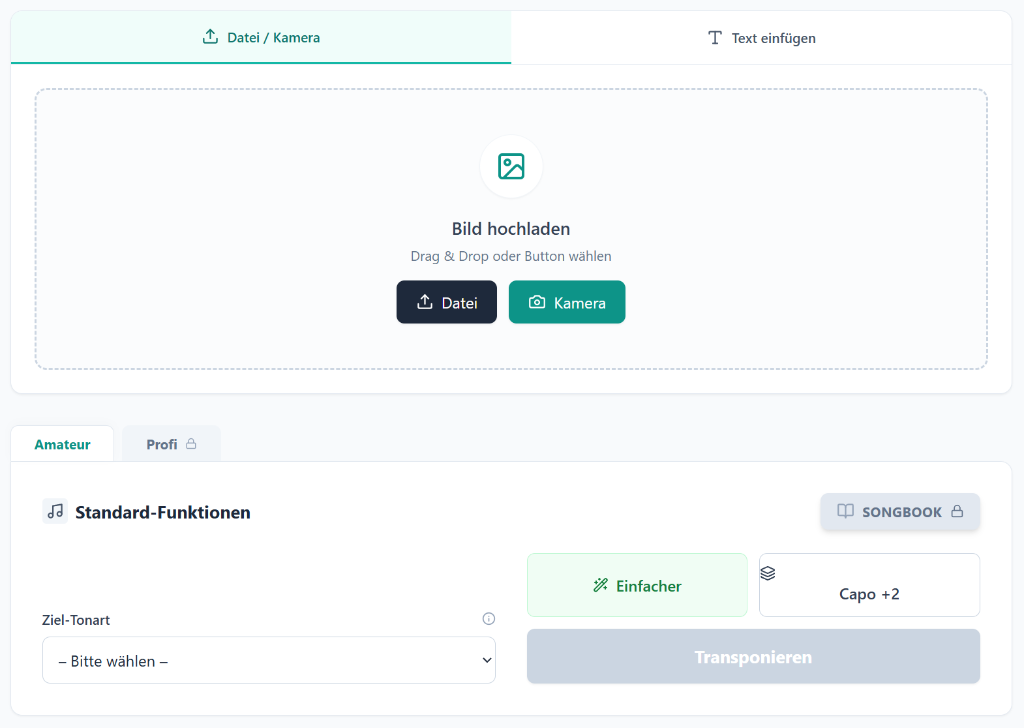
Muuda oma akorde kiiresti ja lihtsalt
Käigu akordileht aitab sul kiiresti leida sobiva tonaliteedi. Iga muusik, olgu see algaja või professionaal, leiab siit lahenduse oma lemmiklaulude esitamiseks.
Süvateooria ja tähelepanekud
Süvendatud teadmised professionaalidele. Nüansid, mida algajad sageli ei märka.
Mootorite ja akordide teooria
Käigu akordide funktsionaalsus
Käigu akordide kultuurilised ja ajaloolised kontekstid
Korduma kippuvad küsimused
?
How does 'Käigu akordileht' reflect the cultural and musical traditions of Estonia, and what specific elements within the sheet music illustrate this connection?
Käigu akordileht serves as a vital link between Estonia's rich cultural heritage and its musical traditions. This sheet music encapsulates the essence of Estonian folk music, which is deeply rooted in the country's history and identity. The use of traditional modes, particularly the phrygian and mixolydian scales, can often be observed in these compositions, reflecting the ancient melodies characteristic of Estonian songs.
The presence of simple chord progressions is another element that illustrates the accessibility of Estonian folk music. Such progressions not only make the music easier to play but also invite community participation, embodying the spirit of communal singing that is prevalent in Estonian culture. Instruments like the kannel or accordion, often found in the accompanying arrangements, further link the music to traditional practices.
To fully appreciate the cultural significance of Käigu akordileht, individuals are encouraged to engage with the music actively. Consider forming a small music group to perform these pieces or participating in local folk music events. This engagement helps preserve the cultural narratives embedded within the music while strengthening community bonds.
?
Why is 'Käigu akordileht' considered an important resource for both amateur and professional musicians in Estonia, and what benefits does it provide in the context of music education?
?
In what ways has the historical context of Estonia influenced the composition and arrangement of pieces found in 'Käigu akordileht', particularly during significant social or political changes?
?
How do the notational choices in 'Käigu akordileht' enhance the interpretative possibilities for performers, and what challenges do these choices present?
Käigu akordileht is notable for its innovative notational choices, which significantly enhance the interpretative possibilities for performers. The use of fluid symbols and non-traditional notation allows artists to read between the lines, fostering a personal connection to the music. This kind of notation encourages creative improvisation, as musicians can explore different interpretations, harmonies, and dynamics that may not be explicitly notated. Such flexibility invites performers to incorporate their own style, enriching the overall performance and making each interpretation unique.
However, these notational choices also present certain challenges. The abstract nature of the symbols can lead to confusion, especially for performers who are accustomed to conventional sheet music. Deciphering the intent behind the notation requires a deep understanding of the underlying musical concepts. Musicians may need to spend extra time interpreting the score before they can confidently perform it.
To navigate these challenges effectively, it is advisable for performers to engage in collaborative practice with peers who may also be interpreting the piece. Additionally, seeking guidance from the composer or analyzing recordings of accomplished performances can offer valuable insights into intended interpretations. This dual approach of collaboration and research can lead to more profound performances that honor the score’s complex nature.