Miks see on keeruline?
Paljud muusikud seisavad silmitsi probleemiga, et laulud ei sobi nende hääleulatusele või instrumentidele. See võib muuta esinemise keeruliseks ja vähem nauditavaks.
Nutikas lahendus
Käigu akordid PDF-ist pakuvad mugavat ja kiiret võimalust kohandada akorde vastavalt teie vajadustele. Lihtsalt laadige üles oma PDF ja leidke sobivad akordid oma muusikasse.
- Lihtne ja kiire PDF-i üleslaadimine
- Kohandatud akordid vastavalt hääleulatusele
- Toetab erinevaid instrumente
- Professionaalne abi igasuguste akordide leidmisel
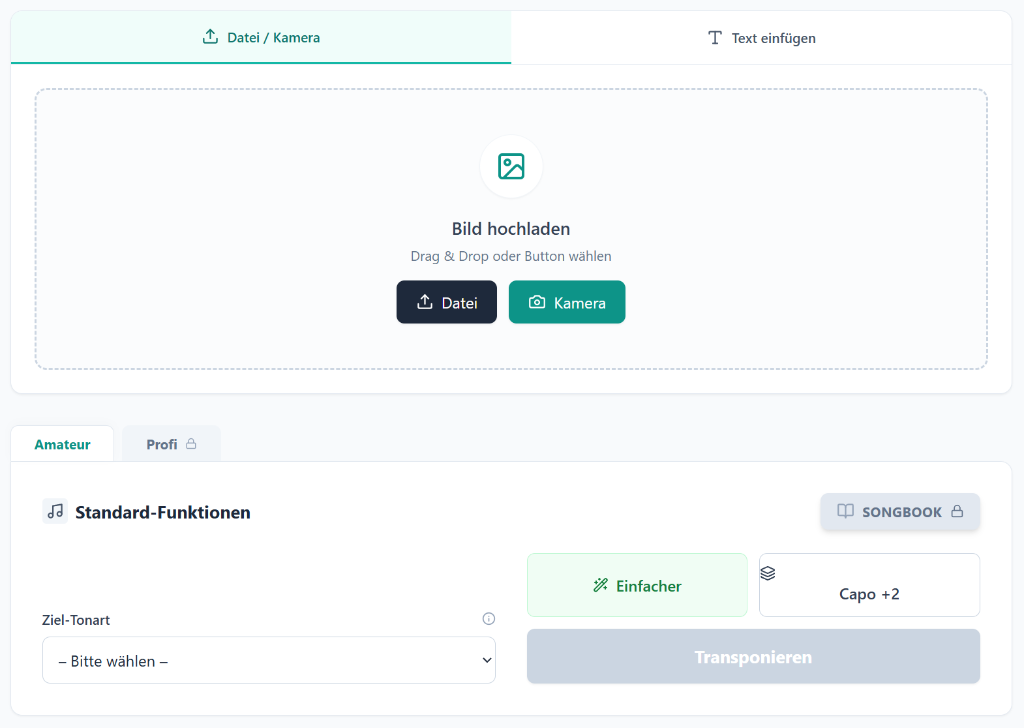
Kohandage oma akorde lihtsalt ja kiiresti
Käigu akordid PDF-ist võimaldavad teil kiiresti leida ja kohandada akorde, et need sobiksid teie hääle ja stiiliga. Meie tööriist teeb akordide leidmise ja muusika mängimise lihtsaks, olenemata teie oskustest.
Süvateooria ja tähelepanekud
Süvendatud teadmised professionaalidele. Nüansid, mida algajad sageli ei märka.
Käigu akordide teoreetilised alused ja nende rakendamine
Käigu akordide analüüs ja nende ajalooline kontekst
Käigu akordide digiteerimine ja PDF-failide loomine
Korduma kippuvad küsimused
?
How does the structure of 'Käigu akordid PDF-ist' contribute to the overall understanding of musical theory in the context of Estonian music?
The structure of 'Käigu akordid PDF-ist' plays a crucial role in expanding our understanding of musical theory, particularly within the context of Estonian music. This document systematically categorizes chords and their applications, reflecting a rich cultural heritage that integrates both traditional and contemporary elements. By examining the organization of the chords, one can observe how progression patterns are tailored to fit the unique stylistic attributes of Estonian compositions, showcasing the interplay between folk melodies and modern harmonic practices.
Furthermore, the structure encourages a deeper engagement with music through its practical examples. It serves as a guide for musicians, facilitating an exploration of various chord progressions that resonate with the emotional and cultural landscapes of Estonia. For learners and educators, this can provide a valuable resource for teaching not only the technical aspects of chord construction but also the cultural significance behind them.
To leverage the knowledge contained within 'Käigu akordid PDF-ist', musicians should actively analyze these progressions in their own compositions. Practicing these structures in different contexts can foster a greater appreciation for Estonian musical idioms and inspire innovation within their own works. Therefore, engaging with this PDF is not just a theoretical exercise; it's a path towards enriching one’s own musical expression.
?
Why is it important to examine the cultural significance of 'Käigu akordid' within the broader landscape of Eesti folk music, and what insights can this provide into the country's musical heritage?
Examing the cultural significance of 'Käigu akordid' within the broader landscape of Eesti folk music is crucial for several reasons. Firstly, it allows for a deeper understanding of the musical traditions that shape Estonia's unique identity. The arrangements and melodies embedded in 'Käigu akordid' reflect the collective memory and experiences of the Estonian people, serving as a vehicle for storytelling and emotional expression.
Furthermore, by analyzing this work, one can gain insights into how historical events, such as the impacts of foreign occupation and the struggle for independence, have influenced traditional music. This can enrich our comprehension of the evolution of folk music in Estonia, highlighting the ways in which it adapts to changing social and cultural contexts.
To deepen your exploration, consider attending local folk music events or workshops, and engaging with musicians who perform 'Käigu akordid'. This not only enhances your appreciation but also supports the preservation of these important musical traditions. Additionally, studying related literature or engaging in discussions with cultural historians can provide further insights into Estonia's rich musical heritage and its relevance today.
?
In what ways does the arrangement of chords in the 'Käigu akordid PDF' reflect traditional Estonian musical scales and modes, and how does this compare to other European musical traditions?
Võrreldes teiste Euroopa traditsioonidega, kus kasutatakse sageli komplekssemaid akordistruktuure ja harmooniat, osutab Käigu akordide pdf traditsioonile, kus minimalism ja lihtsus mängivad keskset rolli. Estimaalikud akordid kalduvad olema rohkem **monotoonsed** ja põhinevad **korduvatel struktuuridel**, mis võimaldavad kuulajal süveneda meloodilise joonise sisusse.
Parim viis nende akordide uurimiseks on **praktiseerida kohalikke traditsioonilisi laule**, et süveneda nende spetsiifilistesse helikvaliteetidesse ja rütmi, mis Annab teile abilise nende struktuuride mõistmisel ja rakendamisel kaasaegsetes muusikavaldkondades.
?
How can the study of 'Käigu akordid' inform contemporary musicians in Estonia about the evolution of local music styles and their adaptation in modern compositions?
Käigu akordid, which translates to 'Chords of the Walk', is a significant musical work reflecting the traditional **Estonian music** landscape. Studying this piece offers contemporary musicians a unique insight into the **evolution of local music styles**. The tonal structures, rhythmic patterns, and harmonic progressions found in Käigu akordid demonstrate the cultural identities that have shaped Estonian music over centuries.
Understanding these traditional elements allows modern composers to **integrate authentic Estonian sounds** into their works. By analyzing how traditional forms have adapted to contemporary contexts, musicians can create compositions that resonate with both **historical significance and modern sensibilities**. This approach not only honors the past but also enhances the **cultural depth** of new music.
For actionable advice, contemporary Estonian musicians should consider **incorporating traditional motifs** from Käigu akordid into their compositions. This could involve experimenting with the **melodic patterns** and **harmonic progressions** found in the piece, allowing for a fusion of old and new. Workshops that focus on traditional styles could further promote this blending, facilitating a dialogue between past **folk traditions** and **current musical trends**.