Why is this difficult?
Paljud muusikud seisavad silmitsi probleemiga, et laulud ei sobi nende hääletooniga või akordid on liiga keerulised. See võib takistada sul oma lemmiklugude nautimist ja esitust.
The Smart Solution
Käigu akordid klaverile aitavad sul kiiresti ja lihtsalt leida sobiva tonatsiooni, et muuta laulud sinu jaoks mängitavaks ja nauditavaks. Meie tööriist muudab akordide leidmise ja kohandamise lihtsaks, et saaksid keskenduda mängimisele.
- Lihtne akordide kohandamine
- Sobivus erinevatele hääletsoonidele
- Erinevate instrumentide akordide ülekandmine
- Kohandamine professionaalidele ja algajatele
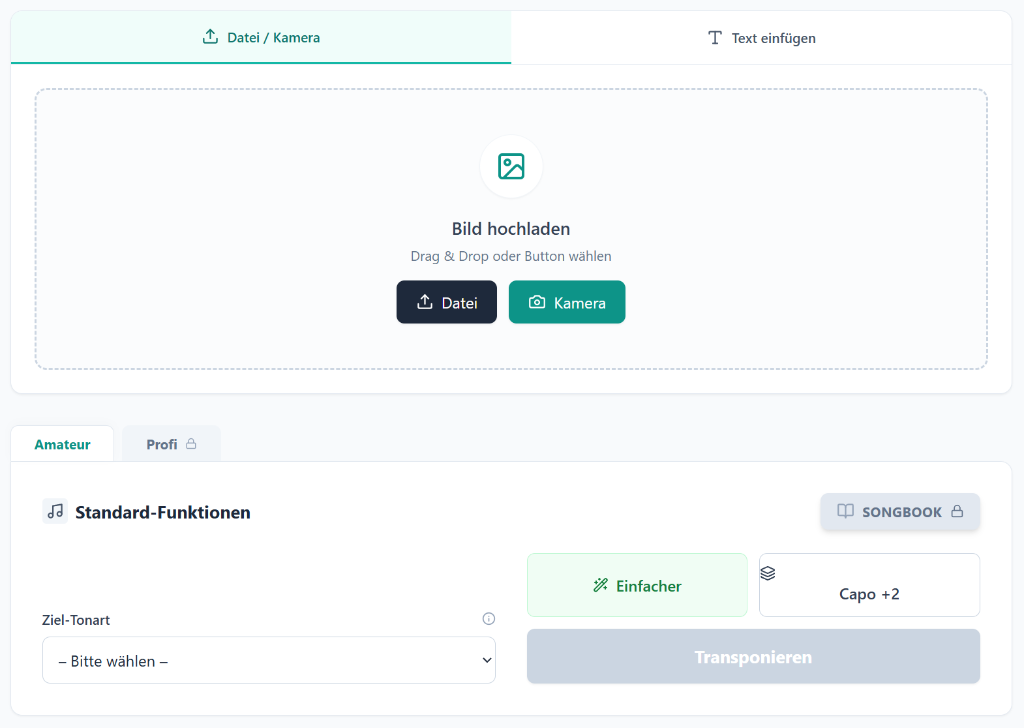
Mängi oma lemmiklaule klaveril kergelt!
Käigu akordid klaverile võimaldavad sul transponeerida oma lemmiklugude akorde, et need sobiksid ideaalselt sinu häälega. Sõltumata sinu oskustest, saad kiiresti leida õige tonatsiooni.
Advanced Theory & Insights
Deepened knowledge for professionals. Analyzing nuances that beginners often miss.
Harmoonilised Käigud ja Nende Rakendamine Klaveri Mängus
Käigu Akordide Täiendamine: Lisakäigud ja Ornamentatsioon
Dünaamiline Rikkus Käigu Akordides: Tehnika ja Tunde Ühendamine
FAQ
?
How do the 'Käigu akordid' differ in their application across various genres of Estonian music, and what specific characteristics make them suitable for each genre?
Käigu akordid, or sequential chords, play an essential role in various genres of Estonian music, each adapting these chords to suit the musical characteristics and emotional expressions of the style.
In **folk music**, käigu akordid often emphasize simple, repetitive patterns that support vocal lines and encourage communal singing. Their straightforward structure makes them ideal for traditional songs, where the emphasis is on melody and harmonization. To apply this in your playing, focus on maintaining a steady rhythm to enhance the communal experience.
Conversely, in **classical music**, käigu akordid are often utilized in more complex harmonic contexts. Here, they can provide rich textures and modulations that bring depth to compositions. For this genre, practice incorporating more intricate arpeggios and dynamic variations to highlight the emotional nuances of the pieces.
In **contemporary pop music**, käigu akordid are often layered with electronic sounds and rhythm patterns. Their adaptability allows for diverse interpretations, so explore different voicings and synth sounds to blend traditional elements with modern styles. This might involve experimenting with different chord progressions that evoke fresh, innovative feels.
To enhance your versatility, consider arranging a single melody across various genres, applying käigu akordid uniquely to each style.
?
Why are 'Käigu akordid' considered a fundamental aspect of piano training in Estonia, and how do they contribute to the overall musical development of a student?
Käigu akordid, or chord progressions, are considered a fundamental aspect of piano training in Estonia due to their vital role in developing a student's musicality and technical skills. Understanding and mastering käigu akordid allows students to grasp the foundational structures of music composition and improvisation, facilitating a deeper appreciation for music.
These chord progressions serve as a practical tool for students to enhance their harmonic understanding. By practicing various progressions, students improve their ability to analyze and interpret pieces of music, paving the way for more complex compositions. Additionally, they also contribute significantly to a student’s finger strength and coordination, which are essential for executing more advanced pieces.
To maximize the benefits of käigu akordid, students should incorporate them into their daily practice routine. Start with simple progressions and gradually increase complexity as confidence grows. Experimenting with different rhythms and voicings can also foster creativity, allowing students to create their own unique sound. By embracing käigu akordid fully, students can enhance their overall musical development and performance capabilities.
?
In what ways can the understanding of 'Käigu akordid' enhance a pianist's ability to improvise and compose original pieces, particularly within the context of Estonian folk traditions?
Firstly, a pianist should focus on the common **harmonic patterns** found in Estonian folk music. By analyzing traditional songs, you can identify recurring **chord sequences** and **scales**, which are pivotal in shaping the characteristic sound of the genre. This practice not only familiarizes you with the style but also inspires original ideas that can be incorporated into your compositions.
Moreover, improvisation benefits greatly from the knowledge of Käigu akordid. As you become comfortable with various chord progressions, experiment with **melodic variations** and **rhythmic elements** that align with Estonian folk music's lively and emotive qualities. Try combining traditional progressions with your unique melodic phrases to create hybrid pieces that honor the tradition while showcasing your individual voice.
Incorporating these techniques into your practice routine will empower you as a pianist to authentically express the rich tapestry of Estonian folk music through both improvisation and composition.
?
How has the use of 'Käigu akordid' evolved over time in Estonian music and piano pedagogy, and what factors have influenced these changes?
?
What role do 'Käigu akordid' play in the cultural significance of music in Estonia, and how might they be used to connect younger generations with traditional Estonian music?
Et nooremad põlvkonnad saaksid paremini suhestuda traditsioonilise Eesti muusikaga, võiksid õpetajad ja muusikalised organisatsioonid kaaluda käigu akordide kasutamise kaasamist hariduses. Näiteks, noored muusikud võiksid osaleda töötubades, kus nad õpivad, kuidas neid akorde kasutada oma loomingus, või isegi traditsiooniliste laulude esitamisel.
Lisaks on oluline luua kasutajaliideseid, nagu mobiilirakendused või veebiplatvormid, kus noored saavad õppida käigu akorde, suhelda oma eakaaslastega ja jagada oma loomingut. Sellised algatused aitavad taastada ja hoida elavana meie kultuuripärandi, muutes selle noortele atraktiivsemaks ja kergemini ligipääsetavaks.