Why is this difficult?
Iga muusik on kogenud hetki, mil laulud ei sobi nende hääleulatusele. Samuti võivad akordid olla liiga keerulised või ebamugavad mängida.
The Smart Solution
Akordide võtme muundur võimaldab sul kiiresti ja lihtsalt muuta laulu tonali, et see sobiks sinu hääle ja mängimisoskustega. Muuda akorde ja naudi muusikat täpselt nii, nagu soovid!
- Lihtne ja kiire akordide ümberarvestus
- Sobitamine hääleulatusega
- Komplekssete akordide lihtsustamine
- Toetab erinevaid instrumente
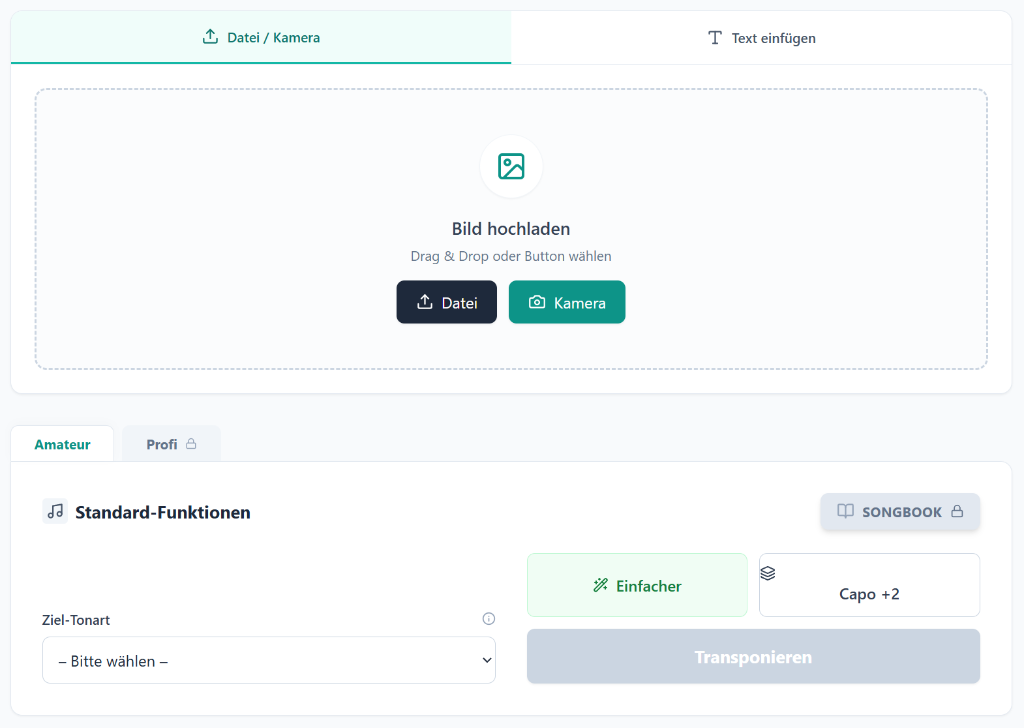
Muutke oma akorde lihtsalt ja mugavalt!
Akordide võtme muundur aitab sul kiiresti leida õige tonali, et iga laul kõlaks ideaalselt. Olgu sa algaja või professionaal, meie tööriist teeb akordide transpositsiooni lihtsaks!
Advanced Theory & Insights
Deepened knowledge for professionals. Analyzing nuances that beginners often miss.
Akordide võtme muundurite tehniline aluspõhi
Akordide võtme muunduri rakendusalad ja loomingulised võimalused
Tehnilised väljakutsed ja lahendused akordide võtme muundurites
FAQ
?
How does the 'Akordide võtme muundur' function within the context of musical theory, and what specific role does it play in the modulation of key signatures in Eesti music?
**Akordide võtme muundur**, also known as a chord key changer or modulator, plays a pivotal role in the realm of musical theory, particularly within the context of **Eesti music**. It facilitates the seamless transition between different key signatures, allowing for dynamic musical expressions and emotional shifts within a composition.
The function of a key changer is to alter the tonal center or key of a piece, thus enabling composers and musicians to explore diverse harmonic landscapes. This technique can create tension and resolution, adding depth to the music. In Eesti music, where folk traditions often blend with classical elements, the use of **modulation** serves to enhance the storytelling aspect, making it a critical tool in advancing thematic development.
**Actionable advice** for musicians seeking to incorporate key changers effectively in their works is to first identify pivotal points in a song that would benefit from modulation—this could be a chorus or a particularly emotionally charged section. Practicing common modulation techniques, such as **pivot chords** or **chromatic alterations**, can significantly enrich the arrangement and overall expression of the piece.
?
Why is the 'Akordide võtme muundur' considered a vital tool for composers and performers in the Eesti musical tradition, particularly in relation to enhancing harmonic complexity and emotional expression?
The 'Akordide võtme muundur' is regarded as an essential instrument within the Eesti musical tradition due to its unique ability to enhance harmonic complexity and deepen emotional expression in compositions. This tool allows composers and performers to seamlessly shift between different keys, thereby enriching the music and providing a more varied auditory experience.
In Eesti music, where traditional elements often blend with contemporary styles, the ability to modulate between keys can introduce new layers of meaning and emotion. For instance, a shift from a major to a minor key can evoke feelings of nostalgia or melancholy, while modulating up can create tension and excitement. This flexibility empowers artists to convey complex narratives and feelings, making their performances more engaging and impactful.
To maximize the use of the 'Akordide võtme muundur', composers should experiment with different modulation techniques in their compositions. Practicing these techniques can also benefit performers, enabling them to react and adapt during live performances, leading to spontaneous creative moments. In the end, integrating this tool into musical practice can greatly enhance the depth and richness of Eesti music.
?
In what ways does the use of 'Akordide võtme muundur' reflect broader cultural influences in Eesti, and how might its application differ from other musical systems or traditions?
?
How can an understanding of 'Akordide võtme muundur' provide insights into the historical development of Eesti music, specifically regarding shifts in musical styles and genres over time?
Akordide võtme muundur is a significant concept in the study of Eesti music, particularly in understanding the transitions within musical styles and genres throughout history. This term refers to the harmonic modulation or change of key, which forms an essential part of musical composition and arrangement. By examining the role of key changes, we can trace the evolution of various musical genres in Estonia, such as folk, classical, and contemporary music.
Throughout the 20th century, Eesti music experienced various influences, from traditional folk elements to Soviet and Western styles. The key changes in compositions often reflect these shifts in societal and cultural contexts. For example, the use of minor and major modulations in folk songs may indicate a response to historical challenges or celebrations, providing a musical narrative that complements Estonia's turbulent history.
To gain deeper insights, musicologists and practitioners should analyze the key modulation techniques in both traditional and contemporary compositions. Engaging in this analytical work not only enhances our appreciation of Eesti music but also fosters a connection to its rich heritage. By documenting these changes, we can better understand the influences shaping Eesti music, facilitating new creations that honor these historical ties while innovating for the future.
?
Why might contemporary Eesti musicians choose to adopt or adapt the 'Akordide võtme muundur' in their compositions, and what impact does this have on the evolution of modern music within the region?
Furthermore, the use of 'Akordide võtme muundur' can lead to innovative **cross-genre fusions**, encouraging collaborations between various styles such as folk, jazz, and pop. This adaptability not only broadens the artistic palette but also reflects the evolving identity of Eesti music in a global context. By embracing this technique, musicians contribute to the **evolution of modern music** within the region, fostering a unique sound that honors tradition while pushing creative boundaries.
To effectively incorporate the 'Akordide võtme muundur', musicians should experiment with different **transitions** and key relationships, ensuring that changes serve a purpose in the overall composition. Engaging with local musical communities and attending workshops can provide valuable insights and inspire innovative applications of this technique, ultimately enriching the contemporary Eesti music scene.